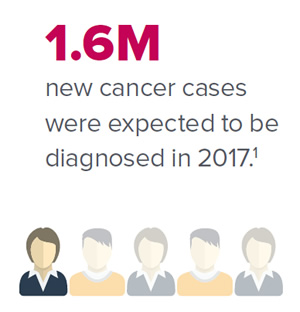
 About 1.6 million new cancer cases were expected to be diagnosed in 2017.1 For many, a cancer diagnosis may be a devastating financial blow, even if they’re already covered by major medical insurance. New cancer drugs are commonly priced at $100,000 a year or more. One-quarter of all cancer patients chose not to fill a prescription due to cost, and about 20 percent filled only part of a prescription or took less than the prescribed amount.2
For these reasons and more, voluntary cancer insurance is becoming increasingly important in helping consumers combat the high costs of cancer – and to focus less on finances and more on treatment and recovery.
 Voluntary cancer insurance is one of many policies available to help people cope with the high out-of-pocket costs associated with serious illnesses — costs major medical insurance may not cover. In the event of a cancer diagnosis, policyholders enrolled in voluntary plans receive cash benefits directly to the policyholder that can be used as they see fit (unless otherwise assigned). Sometimes they go toward daily living expenses, such as rent, gas, groceries, babysitting and other necessities. Other times, they’re used to help pay copayments and deductibles.
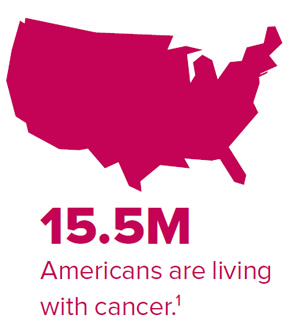 When you consider that nearly 15.5 million Americans are living with cancer, voluntary cancer insurance is an option everyone should consider.1 However, for people who have a family history of cancer or are at higher-than-average risk, voluntary cancer insurance is even more important.
Furthermore, consumers who have been unable to build robust savings should consider applying for voluntary cancer insurance. The treatment and recovery process can result in lost wages and other unforeseen expenses that can be difficult to handle.
Families affected by cancer shouldn’t have to make the difficult decision between medical treatment and making ends meet. Unfortunately, that is the conundrum for a growing number of consumers who face high out-of-pocket expenses, despite having comprehensive major medical insurance. In fact, according to the 2017 Aflac WorkForces Report, 18 percent of workers said they wish their employer offered cancer insurance.3
Voluntary cancer insurance policies can help with the treatment costs of cancer, but more importantly, they can also help patients focus on getting well instead of on medical and personal bills.
No one wants to think about cancer, but it is necessary for employees to consider how they would manage if they were diagnosed and unable to work. A voluntary cancer insurance policy could help make a difference to the well-being of workers and their families.
This article is for informational purposes only and is not intended to be a solicitation.
1 American Cancer Society, “Cancer facts and figures 2017,” accessed Sep. 25, 2017 - https://www. cancer.org/content/dam/cancer-org/research/cancer-facts-and-statistics/annual-cancer-facts-andfigures/2017/cancer-facts-and-figures-2017.pdf.
2 National Public Radio, “As drug costs soar, people delay or skip cancer treatments,” accessed Sep. 25, 2017 – http://www.npr.org/sections/health-shots/2017/03/15/520110742/as-drug-costssoar- people-delay-or-skip-cancer-treatments.
3 The 2017 Aflac WorkForces Report is the seventh annual study examining benefits trends and attitudes. The study’s surveys, conducted by Lightspeed, captured responses from 1,800 benefits decision-makers and 5,000 employees across the United States in various industries. For more information, visit AflacWorkForcesReport.com.
In Idaho, Policies A78100ID through A78400ID. In Oklahoma, Policies A78100OK through A78400OK. In Virginia, Policies A75100VA through A75300VA. This is a brief product overview only. Coverage may not be available in all states. Benefits/premium rates may vary based on plan selected. Optional riders are available at an additional cost. The policy has limitations and exclusions that may affect benefits payable. Refer to the policy for complete details, limitations, and exclusions.
Coverage is underwritten by American Family Life Assurance Company of Columbus. In New York, coverage is underwritten by American Family Life Assurance Company of New York.
Z171459
EXP 10/18







 New messages from Aflac |